
Information Overload Is Making Simple Choices Feel Impossible
On anxiety, information overload, and finding solid ground

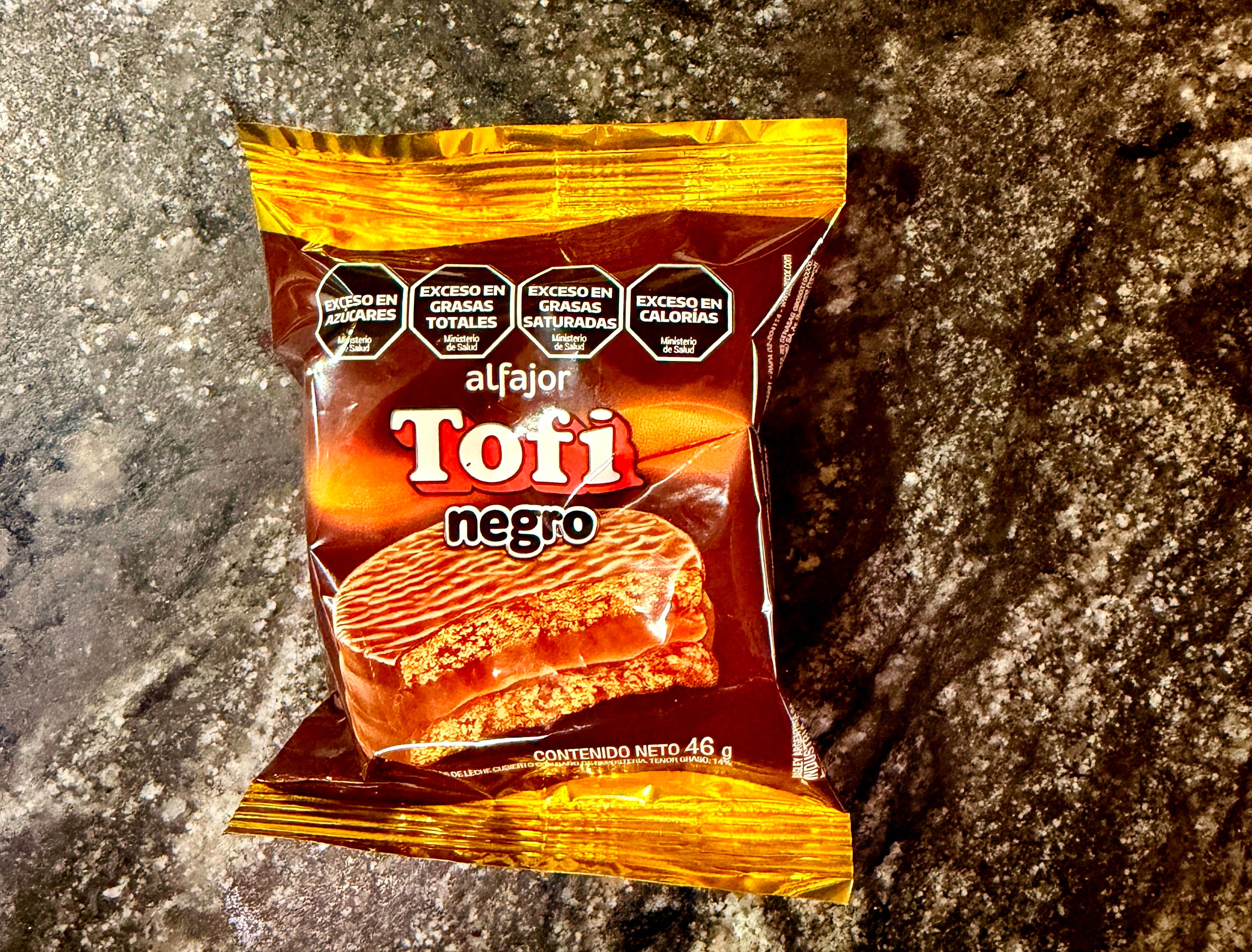
When did eating a cookie start to feel as risky as jumping without a parachute?
You know what’s strange?
Twenty years ago, my only phone was a cellphone. And my calls? Never under 30 minutes. Don’t ask a Latina to keep it short.
The problem wasn’t time.
It was heat.
The phone would get so hot I had to put it in the fridge just to cool it down. More than once.
Until one day, I got dizzy. I couldn’t stand up. I thought: Of course, it’s the phone… but nobody believed me. “There’s no research to support that,” I was told. And I was left singled out. Still dizzy, now also confused.
But no research doesn’t prove anything. It just means nobody cared enough to look. Not yet.
Researchers catch up. They always do.
But they catch up after the fact.
After exposure. After experience. And way past the point in which people already felt something in their body they couldn’t explain.
And now? We can’t even buy a cookie without thinking.
Was this baked too high? What does it do to you to eat a chocolate chip cookie? That is not information fatigue, or just decision overload. It hits somewhere deeper.

Everything comes with a risk. A disclaimer. A small line in tiny font that says, this might not be safe.
That’s the real change. It’s not that the world is suddenly iffy. It’s that we are expected to be responsible for knowing.
Before, we lived first, and knowledge would arrive later. Oops!
Information was supposed to free you, give you the opportunity for a solid decision. Until it became a sophisticated cage: Every single choice becomes an exercise in second-guessing the risk.
Inviting anyone to dinner, a little note: “Deglazed with wine, contains nuts, not gluten-free.” Or, just skip it. Go out to dinner.
Take e-cigarettes.
Smokers jumped into them. They even brought them into enclosed spaces, as if they were no smoke at all. Until someone decided to study it more closely. And just like that, the ground shifted again.
We don’t even have to go far to learn about any of this. It finds us. TikTok, articles, threads, voices layered on top of voices. We are not searching anymore. We are being fed.
So we keep reading. We compare. We check again, just to be sure. It feels responsible, even necessary, as if one more article or one more perspective will finally settle the question and allow you to relax.
But it doesn’t. It never quite does.
And it’s not just about phones, cookies, or cigarettes.
It’s about everything. What the president on the other side of the world just said suddenly feels more urgent than what our local representative just voted for. As if distance made it imminent.
When was the last time you were able to relax?
Not distracted. Not numbed. Actually at ease. When was the last time you spent a full day without a low-grade worry running in the background?
The problem isn’t the data. It’s the expectation that there should be a final answer that removes the tension completely. So our mind keeps scanning, trying to resolve something that cannot be resolved at that level.
And our body? It follows, tightening just a little more each time, because it never gets the signal that it’s enough. That it can stop.
Somewhere along the way, we lost the key. The one that lets us turn the search off. The one that let’s us feel everything is okay.
When we become collectors of data that has no function in the moment we are living, it turns inward. It is fuel for our worries. Anticipation. A low-grade tension that never quite leaves.
We tap at knowledge. Control. Repeat…
Urgency inflates. Things start to feel equally important, or equally suspicious. Scrolling fills the gap. Light, noise, endless information strangely empty. It looks like engagement, but it’s mostly passive consumption on a loop to nowhere.
Everything floats. Every voice speaks. No voice settles.
In an attempt to find something solid, we simplify the field. People start clinging: Diets. Ideologies. Identities. Experts. Influencers. Not because they are right. Because they feel right, and that helps stabilize something… even if only for a moment.
And somewhere in between, we stopped looking at each other eye to eye. Fully there. Saying hi and meaning it, without scanning for what might be wrong.
When Sherlock Holmes discovers something as basic as the world being round, he gets irritated. Almost offended. Now there’s a piece of information in his head that serves no purpose. It takes up space. It does nothing else for him.
That idea stayed with me.
Not because he was right, but because of what he was protecting. The ability to think without being crowded.
We lost the structure that tells us what to do with what we already know.
What Sherlock was pointing to is the need to guard that space where meaning can land and hold. In older language, something like an axis mundi. Not religious: Structural. A point that organizes what matters. A hierarchy of values that are meaningful to us.
We don’t need research to tell us what the body is already showing, when something feels off.
At some point, it’s not about knowing more. It’s about being able to stand somewhere.
I need to stay intact while I choose. I need a place that is steady enough for me, for all of us, to engage in the business of living.

I love this Dr. Lia. And I think being present and turning off the "search bar" is an act of self-love. I'm going to go have a cookie.